Showing posts with label History. Show all posts

Sunday, August 10, 2014

Third Reich from the Sun: Nazis, Space Medicine, and The Habitable Zone


Oh yeah… You read that right.
The Nazis.
Space medicine.
And the Circumstellar Habitable Zone.
What do all three of these things have in common?
One brilliant German physiologist’s tarnished reputation. His name was Hubertus Strughold, and he was truly a remarkable man. Today at To Infinity and…In Theory we’re going to talk about this World War II doctor of the Luftwaffe, Operation Paperclip (swear to God, actual name), the beginnings of Space Medicine, and something else.
Oh yeah.
The Habitable Zone.
The Habitable Zone is where we live, Earth. We’re just the right distance from our sun to meet all the requirements to sustain life. But if extremophiles have taught us anything in recent years it’s that the requirements for life may be a little more bendable then we initially led ourselves to believe.
But the Habitable Zone isn’t just important because of Earth, which would be narcissistic to say at best. Turns out, there are billions of planets out there that may meet the requirements to sustain life of some kind. Even rogue planets may experience enough tidal heating to maintain an atmospheric pressure suitable. Our entire way of thinking may have to shift in the search for life..
But before we get too far ahead of ourselves, let’s strap on our combat boots and climb down into the trenches of WWII with Hubertus Strughold.

The Führer of Space Medicine
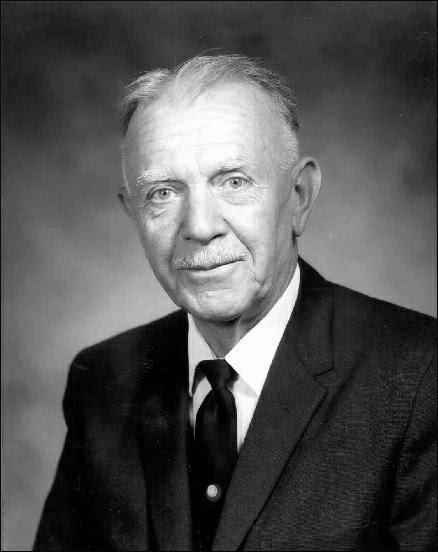

Here at To Infinity and…In Theory we like to laugh, however…if Monty Python taught us anything it’s that Nazis just aren’t that funny.


So, being that Nazis aren’t funny, you’re probably wondering why I’m making jokes about Dr. Strughold. Well, let me clarify this for you then. I’m making jokes because…drum roll please…
Yep, you guessed it. Hubertus Strughold wasn’t a Nazi.
He was a high ranking medical officer for the Luftwaffe however, which was the German Infantry. Basically, he just worked for the Army…but I can totally see how you’d get those two mixed up… (Kidding…sarcasm…actually can’t believe people get those mixed up…). Several of his assistants and pupils had gone on to work for the Nazi regime however, and before the start of the war Strughold had correspondence with Joseph Goebbels, a high ranking SS officer.
But saying because he knew one psychopath would be akin to saying that because you went to high school with Charles Manson you’re going to grow up to be part of his celebrity killing cult.
Needless to say a brilliant man’s reputation has been tarnished, and brilliant he was indeed. His research during World War II propelled modern aeronautics medicine ahead by decades. I won’t go into the details of the people performing the experimentation processes, but they studied oxygen deprivation and hypothermia amongst other things.
At the end of the war Hubertus found himself on the losing side in an appalling war. I firmly believe he had nothing to do with the Nazi war machine or the abhorrent nature of the Nazis’ atrocities, but that is just one man’s humbly earnest opinion. Needless to say however he had a unique skill set, and Uncle Sam wasn’t one to overlook talent. Hubertus Strughold found himself amongst 1,500 or so odd German doctors, scientists, engineers, and technicians that were immigrated to the United States to work on various projects through a program titled “Operation Paperclip”.


If you’ve seen the Shamwow infomercial you know, “The Germans build good stuff!” Despite the fact the endorser on the advertisement strikes me as a strange fellow and slightly daft he makes a good point. The Germans are well known for building products that are…well, good. They make them to last, and keep great records. Even as a doctor Hubertus was no slouch at sciences in general, which made him an invaluable asset. Good thing they snagged him up in the draft too, because he went on to achieve some truly great things.
He was the first to figure out what the effects of space would be on a human being by overseeing the construction of the Space Cabin Simulator and supervising the testing. He also designed the pressure suit and life support systems used onboard the Apollo missions, without Strughold, we’d have never beat the Russian’s to the moon!
Strughold was investigated extensively by the Department of Justice, and since he was found clean every time, was allowed to continue his work with NASA and the United States government. Hubertus was awarded dual citizenship in the late 50’s and an award was established in his name in 1962. What was the award for you ask? Space medicine. He is known as the Father of Space Medicine after all.
Anyone who advanced the field of space medicine significantly was given the Hubertus Strughold award. It was presented by the Aerospace Medical Association. Every year since 1963 the award has been presented, and a prestigious one it is, but in 2013, due to his tepid past, the Hubertus Strughold award was suspended. It still has not been confirmed as to whether or not it will be brought back. Personally, I hope it will. It isn’t fair to ruin someone’s reputation with slander


. But that didn’t stop him from making major contributions to our space programs and to the medical field in general. I have no need to discuss what happens to your body when it’s exposed to space; from oxygen deprivation to genetic mutations the publication IFLScience.com has a wonderfully written article all about it. You can read that here. In short, they wouldn’t know all that if it wasn’t for Hubertus…and Nazis unfortunately…but not a Nazi Hubertus!
Make sense?
Heaven to Betsy I hope so.
Anyway, it wasn’t just space medicine and alleged war crimes that Hubertus showed a propensity for. He was also, (like almost every scientist who ever existed before him) a bit of a philosopher. He wrote a treatise on physiology in space titled The Green and the Red Planet: A Physiological Study of the Possibility of Life on Mars and in it used the words “ecosphere” and referenced various “zones” in which life could possibly propagate in relation to distance from a star.
While his arguments weren’t exactly grounded in Astrobiological Science, he raised some good points. Which is why shortly after he wrote it in 1953, an American Astronomer took strong interest in it, because unlike Hubertus, he could apply the missing puzzle pieces of the Science that Hubertus had overlooked.
He called it “Liquid Water Belt theory”, and that’s what we’re going to talk about next.

“You Are ‘Here’”


In 1953, Harlow Shapley took Strughold’s theory a step further by making it plausible. He proposed what was then called “Liquid Belt Theory”. In his theory he surmises that given what we knew about the sun, and what we knew about life on Earth and it’s necessity for water, that only planets within a certain “range” of their star would be able to support liquid water at its surface. Therefore, only these planets would be able to sustain life. Sounds like wild conjecture right?
Except for the fact that Shapley was already well beyond qualified to answer these questions. How was he qualified you ask? Well in 1920 he was able to correctly postulate our position in the Milky Way Galaxy and our sun’s relation to it. Long before the technology even existed to correctly just “guess” that kind of thing. The man was a genius.
What was exceptional about him though is that had one known Shapley in his youth, they never would have guessed his massive intellect. He had dropped out of school in the 5th grade, and later, when he applied to a high school, he and his brothers were denied as being “unprepared”. Instead they attended a parochial school, received a diploma, and by 1910, when Harlow was only twenty-five, he received his B.A. with high honors in mathematics and physics.
Not bad for a grade school dropout, eh? A year later he received his Masters and was recommended for the prestigious fellowship offered by Princeton for his remarkable achievements. During his fellowship he disproved the age old theory of Cepheid stars being binaries. It would not be the last time Cepheid’s would be studied and revised however, but his contributions to it were the most tremendous since 1784, when Edward Pigott first proposed it.
So why were the ecosphere and the liquid belt theory so important? Because they became the key components of our next subject. The Circumstellar Habitable Zone.

Goldilocks and the Three Suns


Ecosphere, Biosphere, Hydrosphere, call it whatever you want, but at the end of the day, it’s the golden area of opportunity for life to exist called the Habitable Zone. Colloquially called “The Goldilocks Zone” by some researchers, this area of hospitality in the fundamentally harsh regions of space has been tossed and turned by scientists for decades.
Certain stars burn at certain temperatures. Red dwarf stars tend to be cooler than our medium sized yellow one. Blue stars are thought to burn the hottest. Then you get into Orange, White, and Brown dwarfs, and blah, blah, blah. There’s a dozen or so odd star types, but for our purposes, we’re going to talk about suns that are actually life sustainable.
As you can see from the picture above the areas that are red around each star are the hottest and are deemed inhospitable for life to exist. But if extremophiles here on Earth have taught us anything it’s that life can exist in the most unforgiving environments. (Remember our four part spotlight on Extremophiles? Catch up here! Part One, Part Two, Part Three, Part Four)
So while these zones may not be able to sustain human life as we know it, it could certainly maintain Methanotrophic bacteria, such as the ones that thrive at the bottom of the Marianas trench, or maybe some of the Cryophiles that survive in the depths of Lake Vostok beneath Antarctica. Our understanding of “life as we know it” has shifted drastically in the last decade.
But even cooler still are the planets that can support our kind of life. Humans. Those are the ones that scientists are most interested in. We should all be interested in them too, because we’re quickly destroying our current one, and we may be long overdue already for a reset button.
So where are some of these planets capable of supporting life of some kind? Let’s go all Guardians of the Galaxy…


…and do a little exoplanetary exploration of our own. Also, just as a quick disclaimer, the photos in the accompanying sections of the exoplanets are just artists’ representations (like that amazing concept art above!) and not photographs, still, enjoy!

HD 85512 b


HD 85512 b finds itself nested in the Vela constellation about 36 light-years from our planet. It’s a super-Earth, being that its mass is almost four times bigger than our own. Through the High Accuracy Radial velocity Planet Searcher (HARPS) program in Switzerland, HD 85512 b was discovered to be flying within the habitable zone and this one could potentially contain liquid water at its surface.
But this one isn’t the only potential candidate for life support abilities. HD 85512 b so far is thought to be one of best, but so isn’t the next one on our list.

Gliese 581 d


Unlike HD 85512 (The Sun of the planet we just talked about) which is an Orange Dwarf, Gliese 581 d orbits a Red Dwarf. According to scientists it would have a dark and murky atmosphere with twice the gravity of Earth. Initially thought to have been tidally locked, this giant with seven times the mass of our planet, has been rethought extensively. Now it’s believed that Gliese 581 d has a dense Co2 atmosphere, meaning it could trap heat well and maintain liquid water on the surface.
The drinkability of that water is questionable and the distance is over twenty light-years from us making this a far off candidate for the distant future. But what about the next one on our list?

Gliese 581 g (or is it??)


Nothing will bring you to the verge of an existential quandary faster than people questioning your existence, (or your status…I miss Pluto…), but that’s exactly what’s happening to 581 g in the Gliese 581 orbit. He orbits the habitable zone, has the potential to harbor liquid water at its surface, maybe even be a better candidate than his brother, but there’s one problem…
They don’t even know if he exists…
Poor Gliese 581 g. Unlike him, we’re certain of the next one, discovered as a part of the Kepler program.

Kepler 186 f


If you thought that HD and Gliese were a long distance off, you were sadly mistaken. Those systems are right around the corner in comparison to the 490 light-years between us and Kepler 186 f. Recently discovered this year back in April, it is only a mere 10% larger than Earth and is the closest planet to Earth in size ever found in a habitable zone.
This is a huge deal. Not only does that mean Kepler 186 f can sustain life as we know it scientists are saying that life could even thrive on its surface. Its system is set up a lot like ours as well, with multiple planets too far away from or too close to their star to sustain life. Unfortunately, its great distance means tremendous strides will have to be made in telescoping technology in order for us to get a close up glimpse of its surface.

Kepler 22 b


But if you thought Kepler 186 was a ways out there, Kepler 22 b is here to tell you that’s just a skip across the pond. At a whopping 600 light-years from us, this Earth 2.0 planet discovered in 2010 was initially thought to be the end-all for the search. With an estimated surface temperature of 72 degree F, Kepler 22 b is more than capable of sustaining liquid water. However, given its distance, that’s probably all we’re really going to know about him for a while.

HD 40307 g



Located a measly 44 light-years away, this Super-Duper mega-sized Earth could hold seven of our little blue balls inside of it. With a length of year slightly half that of ours and a distance of 40 million miles closer to its star, HD 40307 g finds himself right smack in the habitable zone.
Because of its relative closeness to us, next generation telescopes are thought to be able to peer at its surface. Perhaps within a decade we may actually be able to catch a glimpse of life on another planet.

Tau Ceti e


The last one on our list today is the unconfirmed planet Tau Ceti e. The strangest thing about this planet is the fact that it’s unconfirmed when it’s the closest one on our list at only 11 light-years from our sun. Should the confirmation come about however this could prove gigantic to the scientific community, because not only would the surface of the planet be close enough to take snapshots of in a few years, but being in our own “cosmic backyard” could mean Tau Ceti would become the target of future interstellar missions.
Take that Orson Scott Card. No more 3 millennium long trips.
All jokes aside every planet on this list, and many, many more just like them, could prove once and for all that we’re not alone out there in the galaxy. Now the real question is…
Do they even want to meet us?

-       Ryan Sanders


Thanks for reading! As always if you would like to know more feel free to follow any of the links below! Share this around on Twitter, Facebook, Reddit or wherever else Social Media takes you, and be sure to head over to Facebook and give the To Infinity and In Theory page a big thumbs up! Happy Learning everyone!

-       Wiki on Cepheid Stars
-       Wiki on HD 85512 b


Friday, August 8, 2014

The Darwin Awards: Proving Charles Right Since 1985


It was either Harlan Ellison or Frank Zappa that said, “The two most abundant things in the universe are hydrogen and stupidity.” The latter couldn’t be closer to the truth. Everyday around water coolers, digging ditches with pals, or having drinks with the buddies, somebody has a story about someone doing something stupid. In certain circles we call these less-than-subpar intelligence life-forms pariahs and outcasts…
In other circles…
Well, they’re sort of…ya know…celebrated…
That’s right. Every year since around 1985 the dumbest of the dumb have been forever immortalized. At first the list circulated via word of mouth, but then in 1993 the list hit the Internet, and by 2000 books were in print, and morons were mainstream.
Nowadays we can get most of our fill of the flippantly foolish and foppish from videos via YouTube. (Say that ten times fast…) But for some, well, there’s www.DarwinAwards.com. That’ll give you the most comprehensive list of the dumbest, dopiest, dolts that have ever attempted to do something going against the very laws of intelligence itself, and were immediately witch-slapped in the face by the good ol’ backhand of karma for it.
Today at TI&IT we’re going to delve into the world of the mentally deficient and the half-baked. All of these examples can be found at the website mentioned above, and if you’d like to purchase some of the print versions of “The Darwin Awards” by Wendy Northcutt I will include a link at the end of the article. Without her delightful investigative reporting of the idiotic we wouldn’t have these wonderfully witless antics to tickle your whimsy today.
Before we get into the brain cell deficient however, let’s give you all a little background on The Darwin Awards for those of you unfamiliar. Trust me; there is no shortage of nominees either.

The Origin of Stupidity


I agree Yoda. And so do the rules of being a nominee for the Darwin Awards. See…now this may sound a touch insensitive, but there is only one of two ways for someone to be bestowed this honor. The nominee had to have done something monumentally stupid and died, or they had to have done something that caused them to become sterile. Either way, they have to remove themselves from the gene pool somehow.
Now that may seem a bit harsh but there isn’t exactly a rarity of rash simpletons amongst the throngs of the human race. In fact, with the advent of Social Media it seems stupidity is growing at an even faster and much more alarming rate. But how exactly did the Darwin Awards get kicked off?
The Darwin Awards first began on the Internet of course…well, not exactly the Internet. More like the Internet’s second closest ancestor. Usenet. Don’t know what that is? Not a big deal, it’s the topic of our next section.

AOL Killed the Bulletin Board Star


The history of unnatural selection seems to date back to the 1980s and an early version of the Internet called “Usenet”. Usenet, like the Arpanet, was a precursor to the Internet we use today. It was somewhere between a hybrid of email and an internet web forum, loosely resembling a bulletin board, hence the term “Bulletin Board System”. Yet aside from being drastically different than Arpanet (Which was the original Internet developed by the military), their limitations, and a radical wan in popularity; like the ardor of a Twilight girl’s fandom they refuse to die.
Take “Mono” as it’s known affectionately by its users worldwide for instance. Www.mono.org will take you to a BBS that’s not only still up and running, but is still actively contributed to with 5,000+ threads going up monthly. BBS’s could be navigated with the use of a keyboard only, which was good, considering the computer mouse wasn’t a widely used accessory when BBSs were first introduced.
It was an easy way for the general populace to upload and share valuable information anywhere in the world with ease. That’s what made it a natural forum for the unnaturally yet delightfully dimwitted antics of Darwin-ites the whole world over. When people began their jolly journalism of criminal folly they started by uploading to Usenet in the 80s. The response? Worldwide reception of an elated nature. Everyone wanted more, so it made sense that when the World Wide Web (your [WWW] prefix in the URL) went live in the mid-90s, the Darwin Awards found themselves a proper home on a proper server.
 While Bulletin Board Systems have found themselves outdated and outnumbered by the onslaught of online forums, the Darwin Awards have found themselves an unrivaled acclaim amongst the masses. It’s no wonder. The dumber someone else is the smarter it makes us feel. That’s psychology 101 folks. But how do we know that these people really existed? Let alone could possibly be so stupid!?
Wendy faced that same problem as well. How did she deal with it you ask?
Well…that’s why we call it “journalism”.

Submission, Confirmation, and Reward


Since Wendy’s brilliant concept went global she literally receives thousands of Darwin Award candidates in her inbox every day. Naturally, this is difficult to sort through. I’m sure all of the stories are likely hilarious (what I’d give to see her email…) but that brings us to our next segment, verification. How do we know all of these stories are true?
This was headed off in 1985 on a Usenet post describing the awards as being, “given posthumously to people who have made the supreme sacrifice to keep their genes out of our pool. Style counts, not everyone who dies from their own stupidity can win.” Since 1995 every submission that’s made it onto the website and into her various book compilations has been personally verified through local sources and tedious investigative reporting. Some entries however have been “grandfathered” in to protect their titles as they were put up long before she had the means to prove the verity of them. Either way, whatever’s clever I say.
While Wendy probably wasn’t the one who started the Usenet group (I have no way to verify the identity of the original poster on the discussion forum), she did start the website, and she did write the books. That is why I have to give her the credit in this article today. If you visit the website you will see that each article is categorized at the outset by the phrases, “confirmed true by Darwin,” or “Unconfirmed”. Confirmed true by Darwin doesn’t mean Charles popped out of his grave and said, “Yep, met that twit in the afterlife and he’s just as daft as his epitaph states!” It means that Northcutt herself has verified the claims through various means.
By 2000 the first book (pictured above) went into print, and thank the Lord for that, because I’ve never laughed so hard in my life then when I picked up my first copy. It’s a good thing it took off too, because Wendy gave up a lucrative career in Neurobiology doing research on Cancer and telomerase. (Telomerase are the enzymes responsible for cell aging, a potential “fountain of youth” if you will. Currently they’re kind of a big deal…)


Initially she received resistance in getting her works published by companies telling her to remove her works from the Internet first and then they’d talk. She refused, stating that “It’s a community! I could not do that, even though it might have cost me a lot of money, I kept saying no.” Eventually a publisher named “Plume” took up the sword of her silver tongue and agreed to print her works containing 10% of the material found on her website.
Kudos Plume. Good call.
She’s received numerous letters supporting her, almost as many as the letters defaming her. One person is quoted as writing in, “This is horrible. It has shocked our community to the core. You should remove this.” Not a chance. Sorry to say but if your loved one did something stupid enough to make it into a News report, then they will likely be remembered only for that mistake anyway.
There are honorable mentions on the website as well, people that were inordinately stupid but didn’t meet the requirements for the actual award. Some of the people actually survive the stupid, which sometimes can be amazing in and of itself considering the criteria. Speaking of which, let’s talk about the criteria next and finish up today with some of the greatest goofballs who ever “lived”.

Ten Pounds of Dumb in a Five Pound Sack


If YouTube has taught this current generation anything at all it’s that not everyone was blessed with an abundance of smarts. Thankfully for the rest of us it provides morbid and cheap entertainment. I say morbid because in order to be considered for a Darwin Award you have to be, well, dead.
That isn’t the only stipulation. You can sterilize yourself as well. Either way, as long as you can’t reproduce, regardless of why, and your headstone can read as a cautionary tale to others, you may just be eligible. This is the criteria as posted by Wikipedia:

Inability to reproduce

·         The nominee must be dead or rendered sterile. This has been the subject of dispute. Some are off the table because of age, others have already reproduced. Wendy dealt with this issue head-on by issuing what’s called “The Deserted Island Test”. If the nominee would be unable to reproduce with a fertile member of the opposite sex on a deserted island, then the nominee would be eligible, so long as they meet the rest of the criteria.

Excellence

·         This doesn’t mean what you think it means. Excellence is awarded for outstandingly stupid judgment. The candidates must be unique in their idiocy. Example: Swimming into a lake to retrieve a golf ball and being eaten by an alligator, while unlucky, not eligible. Swimming into a lake to retrieve a golf-ball that’s surrounded everywhere by clearly posted signs in 120 pt. font saying, “Keep Out! Alligators will eat you!” Eligible.

Self-selection

·         You made it happen to yourself. I.E. killing a friend with a shotgun you didn’t know was loaded, dumb, but not eligible for an award. Killing yourself with a shotgun while trying to exterminate an annoying fly buzzing around your kitchen, extremely eligible.

Maturity

·         Capable of sound judgment. Nominees must be past the legal age of consent and be able to at least drive and must not be mentally infirm. Picking on the handicapped is not only mean, it’s not admissible.  

Veracity

·         The story must be confirmed, one way or another.

So there you have it, anybody can be dumb, and that’s why rules needed to be put in place, because anybody can be spectacularly stupid, but only the chosen few get to be Darwin Award recipients. Let’s take a look at a few examples of awardees over the last couple of decades.

That’s One Way to Pierce it…


Labeled as an “At-Risk Survivor” by Northcutt’s website, in 2009 an Oklahoma resident concocted a half-cocked plan to (assumptively anyway…) keep thieves off his property without killing anybody. The idea sounds noble enough. The young man was replacing the pellets in his shotgun shells with plumber’s putty, which would create a sort of rubber bullet on the cheap.
Everything was going great, until, like all great ideas, the testing phase. The man, with a pillow for protection, fired a round of his experimental projectile into his abdomen. The first test was successful so he removed the pillow to see what the damage would be without a buffer in between. Needless to say…the damage was…extensive…
The young man is reported as saying, “Something went wrong, but what?”
I’m no expert, but I’m going to have to assume it went wrong when you decided to play human Guinea Pig sir. But Kudos on your award.

“I Believe I Can Fly…Oh Wait…No I Can’t”


It makes no difference which era you were born in, stupidity has abounded since man bounded into a bipedal state. Take Franz Reichelt (pictured above) for instance. No, he wasn’t an early 20th century version of Batman, turns out, that strange little garment he’s wearing, wasn’t just a fashion statement either. It was intended to be a parachute.
Needless to say it didn’t catch on. In 1912, Reichelt, convinced his invention would work, gathered the press together at the base of the Eiffel Tower in France. Getting up on a platform at the top he readied himself for his dummy drop. And a dummy drop it was as the dummy fell from the top of the tower and plummeted respectively to his death.
Good thing Orville and Wilbur didn’t take their early aviation lessons from Franz, eh? This story was confirmed by a personal account in 2003. Congratulations on your award Mr. Reichelt, you certainly earned it.

Low-Speed Pursuit


In 2005, 26-year-old Joseph of Indiana got it in his head he was going to run from the police. His mode of transportation? Why, a moped of course! With the fuzz on his tail and the wind in his hair, ol’ Joe gunned the throttle on his little Yamaha and took off like a bat out of…well…a nursing home… In a blaze of light, he was off!
Or so he would have had he not been on a moped…
After redlining the glorified scooter to a maddening 40 MPH (64 Km/h) he was almost home free…until he sped through an intersection and lost control. This Hell’s Angel on a hummingbird crashed dead-on into a tree killing himself instantly.
Probably should have stuck to Grand Theft Auto video games Joey.

This Lady Takes the Cake


Sometimes the stories you can’t prove tend to be the funniest of all. This one is an at-risk survivor, an unconfirmed story, but the woman is twice disqualified since she has bred post-incident. What did she do you ask? Well, let’s just say, her intelligence, and her pastries, were slightly half-baked.
Coming home from a long shift at work, the unnamed nominee decided to bake some cake for the little ones. Things were going great as she added in the ingredients to the bowl and mixed them with her antique electric beater. The problem with these beaters though is that the cord wasn’t permanently fastened into the base of the mixer, it was detachable.
Whilst mixing, the cord came free and landed smack dab into the batter. She set the mixer aside and decided to go about cleanup the old fashioned way; by licking the batter clean. Sticking the ungrounded electrical cord into her mouth she was quite literally shocked at the stupidity of her mistake shortly thereafter.
While we said she was disqualified, what makes this story worth an honorable mention is the end. Turns out, the woman was a First Aide safety instructor as her profession. Needless to say, she gives quite an electrifying lecture on the dos and don’ts of powered kitchen appliances.

Peeping Pedró Plummets through Prison per Pornography


Another story confirmed true by Wendy Northcutt, in 1999, in a Mexican prison there was a small interruption to an inmate’s intimate moment. Raul Diaz was a guard well known for taking up the shift on the roof overseeing the correctional facilities inhabitants during conjugal visits. For those of you who don’t know what a conjugal visit is…let’s just say…”private time”.
While privacy isn’t exactly a top tier concern in most penal systems, this private’s penile activity seemed to be under an unnatural amount of scrutiny from Diaz. Diaz however got his when, not paying attention, he tripped over an air vent and came crashing down into the room where “boom boom” time was in full swing.
Outraged the inmate tried to start a failed riot. Local law enforcement recovered a dirty magazine and a pair of binoculars on the hapless corpse of the hard-up with a hard-on. The porn? Retained as evidence. The binoculars? Returned to the family of the deceased as they held “sentimental value”.
I’ll tell you this much…
He certainly put the “mental” in “sentimental”.

So there you have it. I’m sure if you head over to the website and just click on the “Random Story” button you’ll be laughing like an idiot for hours on end. I know I certainly was. Just remember, whenever you think you’re dumb…
…at least you don’t have an award for it.

-       Ryan Sanders


Thanks for reading everyone! Feel free to share the dumb around on Twitter and Facebook! Be sure to head over to the To Infinity and…In Theory Facebook page to give us a like, and follow us on Twitter @ToInf_InTheory. Follow any of the links below for further reading and to pick up a copy of any of Wendy Northcutt’s wonderful works! Happy Learning! And P.S., don’t be a Darwin Award Recipient! Not everyone should strive to be the best!

-       Wiki on Usenet